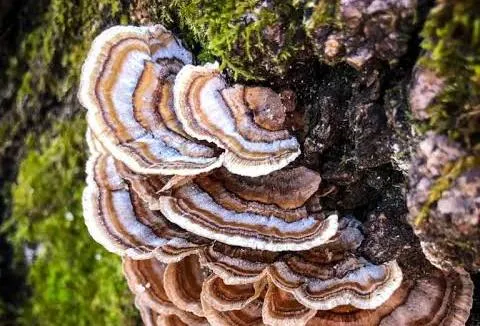
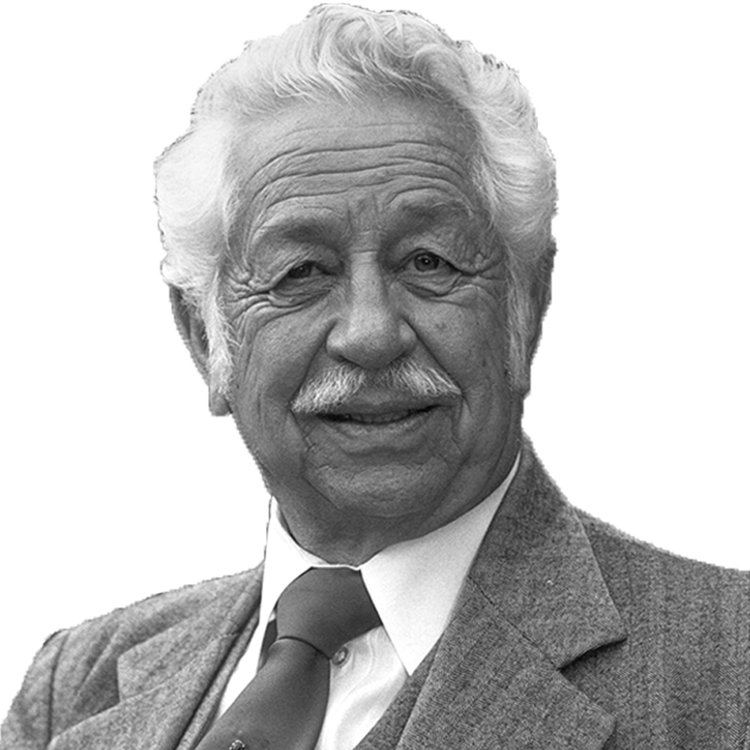
“These delightful denizens of the woods have many attributes. Among fungi, they are the most important and well-documented immune activator and cancer aid. Extensive research shows that turkey tail may help prevent cancer and support patients as they recover from cancer, as well as combat viral infections and address a host of other ailments. They
have one of the highest percentages of beta-glucans – more than 50 percent.” - Christopher Hobbs
Research on Turkey tail is quite extensive - especially around immune function and cancer support. It contains compounds called PSK and PSP (polysaccharopeptides). These compounds activate our natural killer cells and dendritic cells of the
immune system. They also help regulate inflammation and increase white blood cells.
PSK is used in Japan alongside chemotherapy and radiation and improves survival rates, immune function and quality of life.
Studies have shown turkey tail to inhibit the growth and spread of certain cancer cells including colon cancer. There is evidence that it could shrink tumors and assist with the treatment of various types of cancer.
Turkey tail acts as a mediator for the immune system. Rather than simply “boosting” immunity, it
helps bring it into balance. For some, this means enhanced defense against seasonal illness; for others, it may mean calming an overactive response.
Taken regularly as a tea, decoction, or extract, turkey tail becomes part of a long-term strategy for resilience. It is particularly suited to those who feel depleted, who find themselves catching
every passing illness, or who are recovering from prolonged stress or infection. Its action is gradual, cumulative, and deeply rooted in consistency.
Turkey tail is also beneficial for the digestive system. It is very high in fiber which acts as a prebiotic to feed and nourish the beneficial bacteria in the gut helping to cultivate a diverse and
thriving microbiome. In this way, it supports digestion not by forcing change, but by feeding the systems that create balance from within.
Turkey tail is woody and not typically eaten like culinary mushrooms. Instead, it is prepared as a long decoction—simmered for at least an hour to draw out its deeper constituents—or taken as a dual-extracted
tincture. The taste is mild, slightly earthy, and grounding.
As research continues to evolve, Turkey Tail remains one of the most well-documented medicinal mushrooms for immune modulation and adjunctive cancer support. Its role is best understood as part of a broader, integrative approach to long-term immune and digestive health.
Jo Francks is a Master Herbalist working at the School of Natural Healing.